
Sweetpeas journal
 Shopping bag →
A little knowledge.
A clearer choice.
Explore the Sweetpeas article archive: hemp, cannabinoids, product literacy, and the questions our community asks.
EXPLORE THE JOURNAL →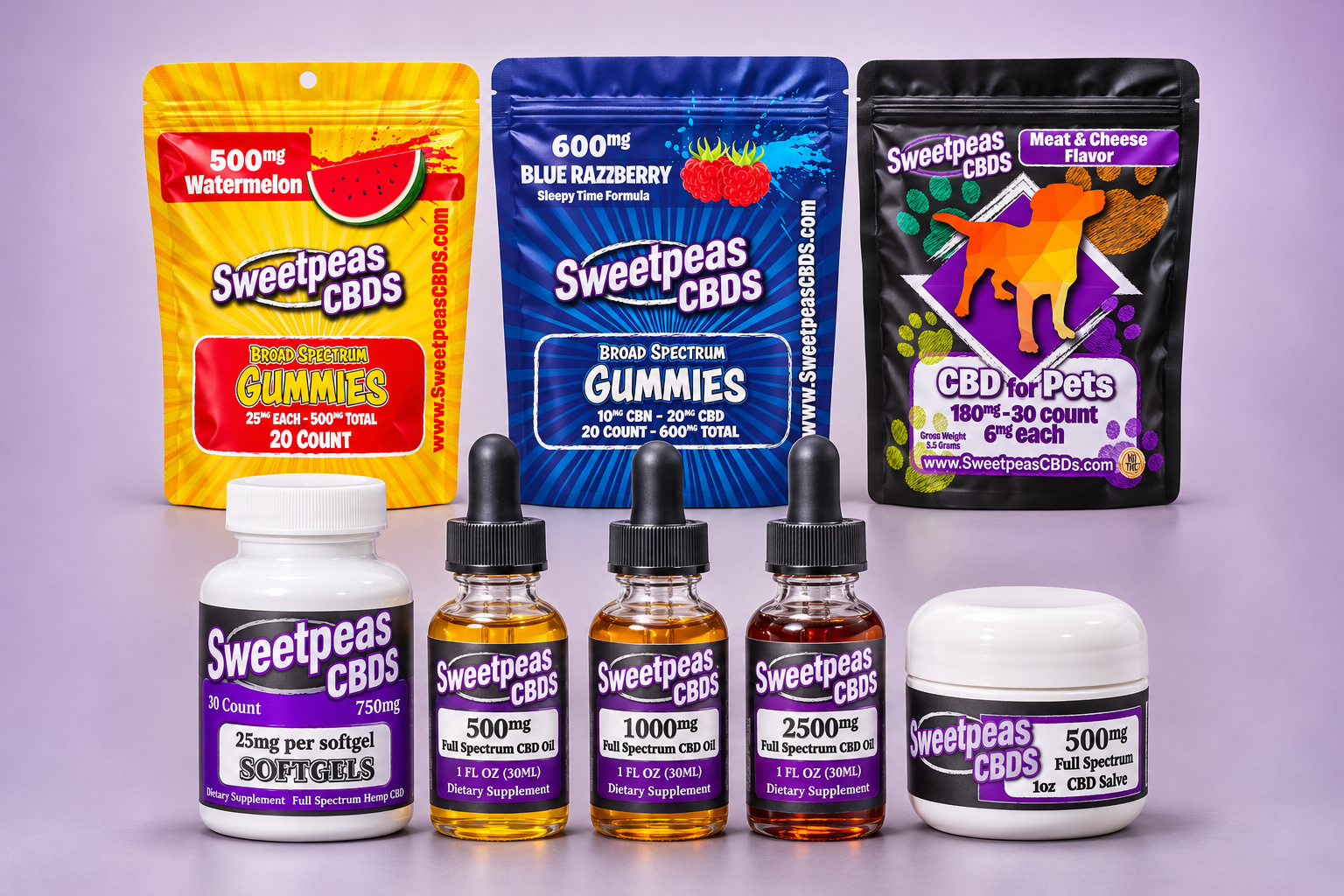
Curiosity starts here.
9 articles
How to Read a CBD Certificate of Analysis (COA): A Simple Consumer Guide
Shopping for a hemp-derived CBD product can bring up a lot of questions. What is actually in the bottle or package? Does the amount on the label match the test …
Read article →CBD & Hemp Laws Are Changing: What Consumers Should Know in 2026
There has been a lot of conversation about hemp and CBD laws lately. If you use CBD—or are simply curious about hemp products—you may be wondering what is chang…
Read article →Exploring the Positive Impact of Full Spectrum CBD on PTSD
Exploring the Positive Impact of Full Spectrum CBD on PTSD
Read article →Baby Boomers – Common Fears of CBD
As the popularity of CBD continues to rise, many baby boomers are intrigued by its potential health benefits but may also find themselves hesitant to try it for…
Read article →What is hemp THCa flower and why….
Read article →Unveiling the Difference: Delta-8 CBD vs. Full Spectrum CBD
In the world of CBD, the terminology can sometimes feel like a labyrinth, but understanding the differences between various products is crucial for informed con…
Read article →Hemp VS Marijuana – do you know the diference
Hemp and marijuana, despite both being members of the Cannabis sativa family, exhibit striking differences, particularly in their usage and chemical composition…
Read article →Full Spectrum over Isolate
Full-spectrum CBD stands as a superior choice over isolate-based CBD due to its holistic benefits. Unlike isolates, full-spectrum CBD contains a rich array of c…
Read article →Exploring the Benefits of CBD and CBN
Discover the Power of Hemp-Derived Compounds for Relaxation, Sleep, and Overall Wellness.
Read article →Read. Explore. Learn.
Articles are preserved from the existing Sweetpeas website. Historical research and legal references may have changed since publication. Archive content is not medical or legal advice and does not establish product safety or effectiveness.
How to Read a CBD Certificate of Analysis (COA): A Simple Consumer Guide
How to Read a CBD Certificate of Analysis (COA): A Simple Consumer Guide
Shopping for a hemp-derived CBD product can bring up a lot of questions. What is actually in the bottle or package? Does the amount on the label match the test results? Was the product checked for unwanted substances?
One useful document to look for is a Certificate of Analysis, often shortened to COA. A COA is a laboratory report for a particular sample. It can provide helpful information, but it is not a magic stamp of approval. Here is a straightforward way to read one and understand what it can—and cannot—tell you.
What is a CBD certificate of analysis?
A COA reports the results of tests performed on a submitted sample. For a hemp-derived product, the report may show the cannabinoids detected and their measured amounts. Depending on the product and the laboratory’s testing scope, it may also include screening for contaminants such as pesticides, heavy metals, residual solvents, or microbes.
Why does this matter? The National Institutes of Health’s National Center for Complementary and Integrative Health notes that some cannabis and cannabinoid products have contained amounts of cannabinoids that differ from their labels, and that contamination has been reported. A clear, relevant lab report gives consumers more information to evaluate than a label alone.
1. Match the report to the exact product and batch
Start with the product name, formulation, strength, and lot or batch number. The COA should identify the sample in a way that can be connected to the item you are considering. If the package has a lot number, look for that same number on the report or ask the seller how the report maps to the product.
A report for a different flavor, strength, formula, or production batch may not describe the product in your hand. If the report does not clearly identify the sample, ask for clarification before relying on it.
2. Check who performed the testing
Look for the laboratory’s name, contact information, report number, and test date. A transparent report should make it possible to identify the lab and verify that the report is genuine. You can check whether the lab publishes information about its methods, quality systems, and relevant accreditation or testing scope.
Do not assume that a logo or the words “lab tested” tell the whole story. Ask what the laboratory actually tested, which methods it used, and whether the testing covered the finished product or only an ingredient or raw hemp material.
3. Understand the cannabinoid results
The cannabinoid section may list CBD, CBDA, CBG, CBN, delta-9 THC, THCA, and other compounds. The exact panel varies by laboratory and product. Check the units carefully: results may be shown as a percentage, milligrams per gram, milligrams per milliliter, or another unit.
For a tincture, shoppers may want to understand the reported amount in the full bottle as well as the concentration. For gummies or softgels, the serving and package totals matter. Make sure you are comparing like with like: a result per gram is not the same thing as a result per serving or per container.
Also look for the difference between a compound that was detected and one reported as “ND” (not detected). “Not detected” generally means the amount was below the method’s reporting or detection threshold; it does not necessarily prove that absolutely none is present. If the report lists a limit of detection (LOD) or limit of quantitation (LOQ), those notes help explain what the lab could reliably detect or measure.
4. Look beyond cannabinoids: check the contaminant panel
A cannabinoid potency panel tells only part of the story. Depending on the product and its ingredients or manufacturing process, useful additional screens may include:
- Pesticides: screening for specified pesticide residues.
- Heavy metals: screening for metals such as lead, arsenic, cadmium, or mercury.
- Residual solvents: relevant when solvents may be used during extraction or processing.
- Microbial contaminants: testing for specified bacteria, yeast, or mold.
Not every test applies to every product, and a COA may not include every possible contaminant. Check which substances were actually tested and whether the report shows results for each one. A blank section or a potency-only report should not be mistaken for a full contaminant screen.
5. Remember what a COA cannot prove
A COA is a snapshot of the sample the laboratory received. It does not automatically prove that every unit in a production run is identical, that the product will remain unchanged throughout its shelf life, or that it is safe or effective for every person. The quality of the sampling, the match to the batch, the lab’s methods, and the scope of testing all matter.
A COA is also not FDA approval, a medical endorsement, or a guarantee that a product complies with every law that may apply to it. The FDA explains that it continues to evaluate questions about the safety, quality, and regulation of products containing CBD. Consumers should not treat a laboratory report as a substitute for understanding the product category and applicable rules.
A note about USDA hemp testing
There is an important distinction between testing a hemp crop for regulatory compliance and testing a finished retail product. USDA’s Domestic Hemp Production Program laboratory guidelines describe testing crop samples to determine total THC concentration on a dry-weight basis for the program’s hemp-production requirements. That crop-compliance test serves a different purpose from a finished-product COA that reports the cannabinoids or contaminants in a bottle, gummy, softgel, or topical product.
In other words, a crop test alone does not tell you everything about the contents or quality of a finished consumer product. Ask what material was tested and what question the report was designed to answer.
A quick COA checklist for shoppers
- Does the report identify the exact product and matching lot or batch?
- Is the laboratory clearly named and contactable?
- Can you see the report date and report number?
- Are cannabinoid results shown with clear units?
- Can you compare the results with the label’s package or serving information?
- Does the report show which contaminant screens were performed?
- Are “ND,” LOD, and LOQ explained?
- Is it clear whether the sample was a raw ingredient, hemp crop, or finished product?
If something is missing or confusing, it is reasonable to ask the seller for a current, batch-matched report and an explanation of the test scope. A trustworthy conversation about product quality should welcome clear questions.
The bottom line
A certificate of analysis is a useful tool for informed shopping when it is current, traceable to the product batch, and detailed enough to show what was tested. Take a moment to match the report to the product, read the units, review the contaminant panel, and remember the limits of a single lab result.
At Sweetpeas Hemp Co., we believe consumers should have room to ask questions and understand the products they are considering. Clear information is part of making a thoughtful choice.
Learn more from authoritative sources
- NIH / NCCIH: Cannabis (Marijuana) and Cannabinoids — What You Need to Know
- FDA: What You Need to Know About Products Containing Cannabis or CBD
- USDA: Laboratory Testing Guidelines for the U.S. Domestic Hemp Production Program
- Arizona Department of Agriculture: Industrial Hemp Program
Safety and information note: This article is for general educational purposes only and is not medical or legal advice. CBD may cause side effects and can interact with medications. Anyone considering CBD should discuss it with a qualified healthcare professional, especially when taking medication or managing a health condition. Keep hemp products secured away from children and pets. Product testing does not establish that a product is appropriate for every individual or use.
CBD & Hemp Laws Are Changing: What Consumers Should Know in 2026
CBD & Hemp Laws Are Changing: What Consumers Should Know in 2026
There has been a lot of conversation about hemp and CBD laws lately. If you use CBD—or are simply curious about hemp products—you may be wondering what is changing and whether it affects you. The good news is that understanding the timeline can make the headlines much easier to follow. This is an educational overview, not a reason to panic or a substitute for legal advice.
First, a quick refresher: what are hemp and CBD?
Hemp and marijuana are both forms of the cannabis plant. CBD, short for cannabidiol, is one of the naturally occurring compounds found in cannabis. CBD is not considered intoxicating in the way THC is. THC is the compound most associated with the “high” from cannabis.
Hemp has a specific legal definition under federal law. For years, the federal definition has generally focused on cannabis with no more than 0.3% delta-9 THC by dry weight. That definition is changing, and the details matter—especially the difference between a law being passed and a provision actually taking effect.
What is changing in federal hemp law?
Congress enacted changes to the federal definition of hemp in 2025. The changes were originally scheduled to take effect in November 2026. In September 2026, Congress delayed most of those changes until December 11, 2026. A narrower provision concerning certain cannabinoids that cannot be naturally produced by the cannabis plant is still scheduled to take effect on November 12, 2026.
In practical terms, the updated definition is intended to use a total-THC standard—including THCA—instead of looking only at delta-9 THC. The legislation also includes exclusions affecting certain synthetic or non-naturally producible cannabinoids. The exact impact depends on the product’s ingredients, formulation, testing, and the specific provision involved.
What this does not mean: It does not mean that every CBD product automatically becomes illegal on November 12. The dates and provisions are different, and the legal status of an individual product cannot be determined from a headline or a product name alone.
Why are there two different dates?
The distinction is important. According to the Congressional Research Service, the provision excluding certain cannabinoids that cannot be naturally produced by cannabis remains scheduled for November 12, 2026. Most of the other amendments to the federal hemp definition have been delayed until December 11, 2026.
Congress may consider additional legislation, and agencies may issue further guidance. That is why responsible updates should rely on current official information rather than social media posts or rumors.
What should CBD shoppers do right now?
- Read the label. Look for the amount of CBD per serving and per container, the ingredient list, and clear product identification.
- Look for independent lab testing. A current certificate of analysis (COA) should identify the product tested and report cannabinoid content. Check that the batch or lot information matches the product when available.
- Ask questions. A responsible retailer should be able to explain what is in a product and provide available testing information.
- Be cautious with dramatic claims. Be skeptical of products promising to cure, prevent, or treat diseases.
- Check reliable updates. Federal and state requirements can differ and may change. Use official agency information when making decisions.
What does research say about CBD?
Researchers are studying cannabinoids for a range of possible uses. There is an FDA-approved prescription CBD medicine for certain rare seizure disorders. Research into many other uses is still developing, and the strength of evidence varies by condition and product. Findings from a prescription medicine or a clinical study should not automatically be applied to every over-the-counter CBD product.
CBD is not risk-free. It may interact with medications and can cause side effects. Anyone who takes prescription medicines, has a medical condition, or is considering CBD for a health concern should speak with a qualified healthcare professional. The FDA advises against CBD use during pregnancy or while breastfeeding. Pet owners should consult a veterinarian before giving a pet a CBD product.
A calm, informed approach
Hemp and CBD rules are evolving, but good information helps consumers make thoughtful choices. Keep an eye on the dates, ask questions about ingredients and testing, and look for updates from credible sources. We believe education should come before assumptions—and that people deserve clear explanations without scare tactics.
Sweetpeas Hemp Co. shares educational information to help readers understand hemp and CBD topics. This article is not medical or legal advice and does not make claims that any product diagnoses, treats, cures, or prevents a disease. Product rules can depend on the specific formulation and applicable federal and state law.
Sources and further reading
- Congressional Research Service: Changes to the Statutory Definition of Hemp and Implications for Agricultural Policy
- Congressional Research Service: Delay in Changes to Hemp Definition—Cannabinoids Not Capable of Being Naturally Produced by the Cannabis Plant
- U.S. Food and Drug Administration: What You Need to Know About Products Containing Cannabis or CBD
- National Center for Complementary and Integrative Health: Cannabis, Marijuana, and Cannabinoids
- Arizona Department of Agriculture: Industrial Hemp Program FAQ
Exploring the Positive Impact of Full Spectrum CBD on PTSD
Exploring the Positive Impact of Full Spectrum CBD on PTSD

Exploring the Positive Impact of Full Spectrum CBD on PTSD
Living with post-traumatic stress disorder (PTSD) can be an overwhelming and isolating experience. The relentless intrusion of traumatic memories, heightened anxiety, and sleep disturbances can significantly impair one’s quality of life. While traditional treatments such as therapy and medication remain cornerstone approaches, many individuals are turning to alternative remedies, with one promising candidate being full spectrum CBD.
Full spectrum CBD, derived from the cannabis plant, contains a wide array of cannabinoids, terpenes, and other beneficial compounds, offering a holistic approach to managing PTSD symptoms. Unlike isolated CBD products, full spectrum CBD harnesses the entourage effect, where the combined effects of various cannabis compounds amplify each other, potentially enhancing therapeutic benefits.
One of the most notable benefits of full spectrum CBD for individuals with PTSD is its anxiolytic properties. Studies have suggested that CBD can modulate the body’s stress response by interacting with serotonin receptors in the brain, promoting a sense of calm and relaxation. By reducing the overwhelming sense of anxiety often associated with PTSD, individuals may experience improved mood and better coping mechanisms when faced with triggers or distressing situations.
Furthermore, full spectrum CBD has shown promise in addressing sleep disturbances, a common symptom of PTSD. By promoting relaxation and alleviating anxiety, CBD may help regulate sleep patterns, allowing individuals to achieve deeper and more restful sleep. Quality sleep is crucial for overall well-being, and by improving sleep quality, CBD can contribute to a more stable mood and better cognitive function during the day.
Another significant aspect of full spectrum CBD is its potential to mitigate hyperarousal symptoms associated with PTSD, such as irritability and hypervigilance. By modulating neurotransmitter activity in the brain, CBD may help restore a sense of balance to the nervous system, reducing the frequency and intensity of hyperarousal episodes.
It’s important to note that while research on the effects of full spectrum CBD on PTSD is still evolving, anecdotal evidence and preliminary studies offer hope for those seeking alternative treatment options. As always, individuals considering CBD as part of their PTSD management plan should consult with healthcare professionals to ensure safe and effective use. With its potential to provide relief from anxiety, improve sleep, and mitigate hyperarousal symptoms, full spectrum CBD offers a ray of hope for individuals navigating the complex terrain of PTSD.
Baby Boomers – Common Fears of CBD
Baby Boomers – Common Fears of CBD
As the popularity of CBD continues to rise, many baby boomers are intrigued by its potential health benefits but may also find themselves hesitant to try it for the first time. Whether it’s due to misinformation, stigma, or personal concerns, here are the top 10 common fears baby boomers might face when considering CBD: Fear of Getting High: Some boomers worry that CBD, derived from cannabis, will induce a psychoactive effect like THC. However, CBD is non-intoxicating and won’t cause a high.
Concerns About Legalities: Despite CBD being legal in many places, confusion about its legality persists. Boomers may fear legal repercussions or societal judgment.
Uncertainty About Effectiveness: Doubts about whether CBD will actually work for their ailments, such as chronic pain or anxiety, can deter boomers from trying it.
Apprehension About Side Effects: Fear of potential side effects, even though CBD is generally well-tolerated, can hold boomers back from experimenting with it.
Worries About Interactions with Medications: Boomers on multiple medications may fear adverse interactions between CBD and their prescriptions.
Skepticism Due to Lack of Regulation: Concerns about the quality and consistency of CBD products may lead to skepticism about their efficacy.
Stigma Surrounding Cannabis: Decades of anti-cannabis propaganda may make some boomers hesitant to try anything associated with cannabis.
Fear of Addiction: Misconceptions about CBD’s addictive potential may cause apprehension, despite evidence suggesting it’s non-addictive.
Anxiety About the Unknown: Fear of the unfamiliar may make some boomers hesitant to try CBD, especially if they lack information about its effects.
Social Stigma: Fear of judgment from friends or family members who may have negative perceptions of CBD could prevent boomers from trying it.
While these fears are valid, arming oneself with accurate information from reputable sources can help baby boomers make informed decisions about whether CBD is right for them. Welcome to Sweetpeas CBDs™, your premier destination for a blissful journey towards wellness through the power of cannabidiol (CBD). As a trusted online purveyor of premium CBD products, Sweetpeas CBDs is dedicated to providing an extensive array of natural remedies for individuals seeking balance, tranquility, and overall well-being. We are proud to be a KUSH.COM trusted CBD wholesaler.
Order with confidence at http://www.SweetpeasCBDs.com
What is hemp THCa flower and why….
What is hemp THCa flower and why….

Exploring the Blossoming Benefits of THC-A Flower
In the realm of botanical wonders, THC-A flower emerges as a captivating specimen, offering a bouquet of benefits to those who seek its essence. THC-A, or tetrahydrocannabinolic acid, is a precursor to THC, the renowned psychoactive compound found in cannabis. Unlike THC, THC-A does not induce intoxication, making it an intriguing option for health-conscious individuals seeking the therapeutic potential of cannabis without the high.
One of the most compelling aspects of THC-A flower is its potential as a powerful anti-inflammatory agent. Research suggests that THC-A exhibits significant anti-inflammatory properties, which may offer relief for conditions such as arthritis, inflammatory bowel disease, and neuropathic pain.
Furthermore, THC-A has shown promise as a neuroprotective agent, potentially offering support for individuals with neurodegenerative disorders like Parkinson’s disease and multiple sclerosis. Its antioxidant properties could help combat oxidative stress and protect brain cells from damage.
Beyond its therapeutic potential, THC-A flower presents a versatile option for wellness enthusiasts. Whether consumed raw, juiced, or incorporated into topical preparations, THC-A offers a holistic approach to health and vitality.
As society continues to embrace the myriad benefits of cannabis, THC-A flower stands out as a beacon of hope, offering a natural alternative for those seeking balance and harmony in mind, body, and spirit.
Unveiling the Difference: Delta-8 CBD vs. Full Spectrum CBD
Unveiling the Difference: Delta-8 CBD vs. Full Spectrum CBD
In the w orld of CBD, the terminology can sometimes feel like a labyrinth, but understanding the differences between various products is crucial for informed consumption. One significant comparison is between Delta-8 CBD and Full Spectrum CBD, each offering unique benefits and effects.
Delta-8 CBD is a cannabinoid derived from hemp, known for its mild psychoactive properties. It interacts with the body’s endocannabinoid system, offering a gentle euphoria and relaxation without the intense high associated with Delta-9 THC. Its rising popularity stems from its ability to provide a milder experience, appealing to those seeking relaxation without overwhelming psychoactive effects.
Conversely, Full Spectrum CBD contains a wide array of cannabinoids, including CBD, CBN, CBC, CBDa, CBG, THC, and others, as well as terpenes and flavonoids present in the hemp plant. This comprehensive blend creates what’s known as the “entourage effect,” where the compounds work synergistically to enhance each other’s therapeutic benefits. While Full Spectrum CBD may contain trace amounts of THC, it’s legally required to contain less than 0.3%, ensuring it doesn’t induce psychoactive effects but still offers a comprehensive range of benefits.
Ultimately, the choice between Delta-8 CBD and Full Spectrum CBD boils down to personal preference and desired effects. Whether you prefer the mild euphoria of Delta-8 or the holistic benefits of Full Spectrum, both options offer exciting opportunities for wellness and relaxation.
Sweetpeas CBDs offers a delightful array of CBD-infused products designed to enhance your wellness journey. From soothing tinctures to delectable edibles, each product is crafted with care using high-quality CBD sourced from organic hemp. Sweetpeas CBDs prides itself on transparency and potency, providing third-party lab-tested products to ensure quality and consistency. Whether you’re seeking relaxation, relief, or simply a moment of tranquility, Sweetpeas CBDs has something to cater to your needs. Indulge in the natural goodness of CBD with Sweetpeas and experience the sweet serenity it brings to your life.
Hemp VS Marijuana – do you know the diference
Hemp VS Marijuana – do you know the diference

Hemp and marijuana, despite both being members of the Cannabis sativa family, exhibit striking differences, particularly in their usage and chemical composition, which significantly impact their applications in various industries. Here are ten main distinctions between hemp and marijuana:
- THC Content: Hemp contains less than 0.3% THC, making it non-psychoactive, while marijuana harbors higher THC levels, inducing the characteristic “high.”
- CBD Richness: Hemp is abundant in cannabidiol (CBD), suitable for producing CBD oil, capsules, soft gels, and edibles, offering potential therapeutic benefits without intoxication. Marijuana also contains CBD, but it’s often overshadowed by higher THC concentrations.
- Legal Status: Due to its low THC content, hemp-derived CBD products, including edibles, gummies, capsules, and oils, are legal in many regions, whereas marijuana-derived products face stricter regulations.
- Cultivation Purposes: Hemp is cultivated primarily for industrial applications such as textiles, biofuel, and hemp oil, while marijuana is grown for medicinal or recreational use, yielding flowers rich in cannabinoids like THC and CBD.
- Edibles and Consumables: CBD-infused edibles, gummies, capsules, and oils derived from hemp offer a convenient and discreet way to consume CBD for various wellness purposes, while marijuana edibles predominantly cater to recreational users seeking a psychoactive experience.
- CBN Presence: Although less common, CBN (cannabinol) is found in both hemp and marijuana, with emerging interest in CBN products for sleep aid. However, hemp-derived CBN products are less prevalent compared to marijuana-derived ones.
- Pet Treats: CBD-infused pet treats, oils, and tinctures derived from hemp offer potential health benefits for pets without psychoactive effects, whereas marijuana-derived products may contain levels of THC unsafe for animals.
- Topical Applications: CBD-infused topicals, such as balms, salves, and creams derived from hemp, are popular for skincare, pain relief, and relaxation, while marijuana-derived topicals are primarily sought for localized relief with potential psychoactive effects.
- Full Spectrum vs. Isolate: Hemp-derived CBD products often boast full-spectrum formulations, containing a range of cannabinoids and terpenes for enhanced therapeutic effects, whereas marijuana-derived products may offer CBD isolates or specific cannabinoid ratios tailored to consumer preferences.
- Accessibility: Hemp-derived CBD products are widely available for purchase online and in stores, offering a plethora of options ranging from oils to edibles, catering to diverse preferences and needs, whereas marijuana-derived products are subject to stricter distribution channels and regulations, often requiring access through licensed dispensaries.
In summary, while both hemp and marijuana offer various cannabinoids and potential health benefits, their differing THC content, legal status, and cultivation purposes dictate distinct markets and applications, emphasizing the importance of understanding these variances when selecting and using cannabis-derived products.
Full Spectrum over Isolate
Full Spectrum over Isolate

Full-spectrum CBD stands as a superior choice over isolate-based CBD due to its holistic benefits. Unlike isolates, full-spectrum CBD contains a rich array of cannabinoids, terpenes, and essential oils present in the hemp plant, working synergistically in what’s known as the entourage effect. This combined effect maximizes therapeutic potential, enhancing the overall impact on the body’s endocannabinoid system. With trace amounts of THC (within legal limits), full-spectrum CBD offers a more comprehensive experience, providing a broader range of health benefits such as pain relief, relaxation, and potential anti-inflammatory properties. Its natural composition reflects nature’s balance, making it a preferred option for those seeking comprehensive wellness support.
CO2 extraction is a cutting-edge method revolutionizing the hemp industry. Utilizing supercritical carbon dioxide (CO2) in a controlled environment, this process extracts cannabinoids, terpenes, and other valuable compounds from hemp plants. The method involves pressurizing CO2 until it reaches a state between liquid and gas, becoming supercritical. In this state, CO2 acts as a solvent, effectively isolating desired compounds while leaving behind impurities. The beauty of CO2 extraction lies in its efficiency and safety, avoiding the use of harsh chemicals. The resulting extract is pure, potent, and prized for its quality in various hemp-derived products, ensuring consumers receive the full benefits of the plant’s natural goodness.
Exploring the Benefits of CBD and CBN
Exploring the Benefits of CBD and CBN

Discover the Power of Hemp-Derived Compounds for Relaxation, Sleep, and Overall Wellness.
In today’s fast-paced world, prioritizing our well-being has become more crucial than ever. Many individuals of all ages are embracing natural alternatives to promote relaxation, improve sleep, and enhance overall quality of life. There are two compounds derived from hemp plants: CBD and CBN.
CBD, a non-intoxicating compound found in hemp plants, is renowned for its potential to promote relaxation, alleviate stress, and reduce inflammation. CBN, another non-intoxicating compound, is recognized for its support in aiding sleep and relaxation.
Exploring Edibles and Gummies
Edibles have surged in popularity due to their convenience and sweet taste. CBD and CBN edibles, available in various forms such as gummies, chocolates, and infused beverages, offer a discreet way to incorporate these compounds into your routine, whether on-the-go or as a relaxing evening treat.
CBD and CBN Oil Tinctures
Customize your experience with oil tinctures by using a measured dropper for precise dosing. Administered sublingually for rapid absorption, these tinctures can also be seamlessly added to food and beverages.
Topicals, Balms, and Salves
CBD and CBN topicals are formulated for external use, providing targeted relief and skin nourishment. Whether you’re addressing discomfort in specific areas or simply seeking to indulge your skin, these products offer a soothing solution.
Not sure which is right for you. Chat with a Sweetpeas team member for more information. Visit SweetpeasCBDs.com